

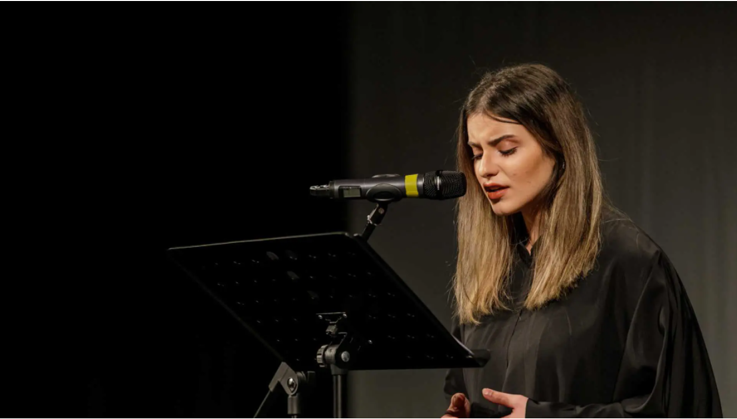
She is 22. She comes from a country where Orthodox Christians are a minority and travels worldwide praising God in the millennia-old musical tradition known as Byzantine music. She invites young men and women to start learning Byzantine chants. “I don’t think that there is something more beautiful than to know how to praise God,” Lebanese female chanter Ribale Wehbé said.
Before heading to the Iași Byzantine Music Festival 2021, Ribale made a short stop at the Basilica.ro newsroom. A week before, she had concerted in the Sascut-Schineni Parish, Bacău county, being invited by Parish Priest Alexandru Grigoraș.
In her interview, she spoke about faith, love for Byzantine music, and what she likes about Romania while traveling between Russia, Austria, Germany, and France.
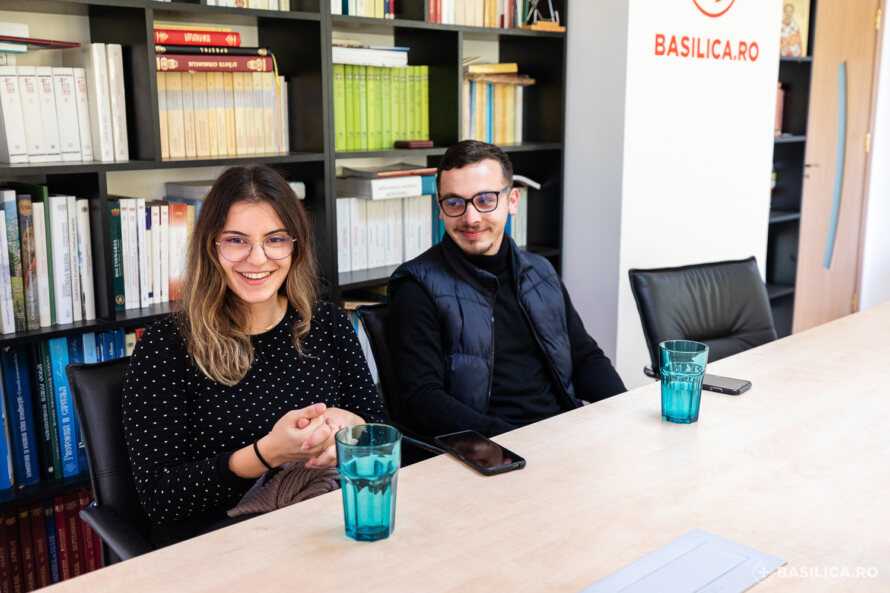
Basilica.ro: How has your family helped you become who you are today?
Ribale Wehbé: I come from a family with great voices. First of all, it was God who gave me that gift, the gift of talent, and then my family encouraged and helped me to progress and work on it. My mother would wait for me for hours while I was learning music at the Conservatory. She had no problem waiting for me while I had solfège classes, theory, piano.
Also, my father and brother are both chanters, and they were taking me to church to be with them and listen to their chanting. I was four or five years old when I first stood by my family and listened to their chanting. They sometimes invited me to chant something small as I was standing next to them in the chant stand.
When I was eight, I was in a large-scale concert in Lebanon. It was entitled “Byzantine music from generation to generation.” There were three soloists: me, a young soloist, and a chanter from the old generation.
Basilica.ro: Who is your audience in Lebanon?
Ribale Wehbé: I have young and old. Now, as I post on social media, I get a lot of messages from people as young as 11 or 12 but also from people in their 50s and 60s. They express their feelings and sometimes ask for musical advice.
Basilica.ro: How is it to be famous?
Ribale Wehbé: It wasn’t my goal to become famous and I don’t see myself as someone famous, but I am really grateful for the thing that I help people to pray. And my purpose is to make as many people as I can meet Byzantine music and its beauty.
I took my Byzantine music diploma a few months ago, and I am a professor of Occidental and Oriental music. Now, especially with Covid, that the courses are held online, I have many students from all over the world.
The gift from God is the basis. The rest is work
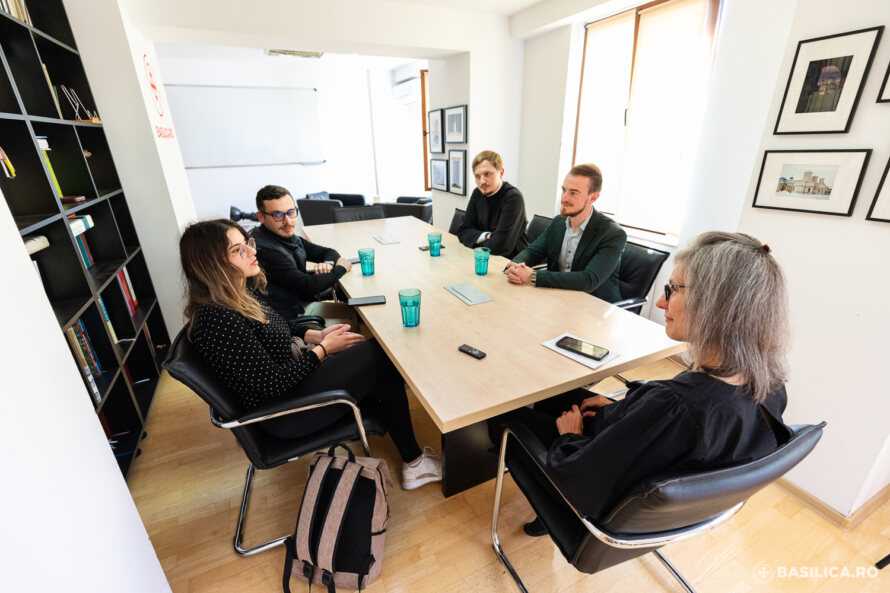
Basilica.ro: What abilities are needed to be a good Byzantine music chanter?
Ribale Wehbé: This is God’s gift. So, this is the basis. If you have it, you can work on yourself, do a lot of research and practice, read a lot to grow knowledge, listen to old and new and find your own style in the chanting world.
Also, I would encourage more women to chant if God gave them the gift of voice. But in Byzantine music, it is essential to start at a young age because this accumulation has brought me where I am today. And the Oriental music has contributed to my chanting. I have been listening to Oriental songs and chants since I was in my mother’s womb. She’s a teacher, she loves kids, and this is how she raised us: with her beautiful voice.
Basilica.ro: There is much talk about Lebanon these days. What should we mainly know about your native country?
Ribale Wehbé: First of all, I want to say that I am very proud of the country I come from. Lebanon is a wonderful country with so much natural beauty. But, unfortunately, for the past two years, the situation has become worse. This crisis is not only financial but also social. When someone loses everything and doesn’t have anything to feed their family, they go extreme.
Outside Lebanon, you hear stories about explosions, killing, terrorism, and generally that we are in a state of war. But that’s not Lebanon, and definitely, it’s not its people. Lebanese people are very kind and very well known for their hospitality. Its food, natural beauty, and people are really worth seeing at least once in your lifetime. I am very sure that Lebanon will soon go again on the top, where it should be.
Innovation works only if rooted in Tradition
Basilica.ro: What can you tell us about Lebanon’s Byzantine music?
Ribale Wehbé: Lebanon is in line with the Orthodox tradition, or the traditional Byzantine music of Constantinople, which is the reference all over the world.
But certainly, like everywhere, like in Romania, the Byzantine music of Lebanon has its particular styles and compositions. It has its specific musical intervals. We can talk, for example, about the 4th and 7th Modes, which are generally very Oriental (the interval instead of being 10, for us, is 9 commas theoretically speaking). The intervals in the fourth mode are slower, the sounds are different, making the whole feeling different. We call it maqam.
And we have what is generally called the Antiochian Style, simple but very rich and expressive at the same time and has a lot of different intervals than the traditional Byzantine music we know.
Basilica.ro: Are you for the renewal or for just keeping the tradition? How do you feel about this millennia-old tradition?
Ribale Wehbé: I do both because you only progress if you know the Tradition. Then you can do something new. This is what makes me unique in my style. I am told the traditional fits, but also the new styles. I love both. I relate especially with every melody I choose. Of course, not everything new is necessarily good. We should not go very far from the tradition. I prefer the middle ground: something traditional but with a different taste.
Basilica.ro: How often have you come to Romania, and what do you like most about being here?
Ribale Wehbé: I’ve been to Romania five times, and every time I come, I fall more and more in love with this country… I like its beauty so much; the people are so much like the people in my country, their hospitality, and love they show me every time makes me feel at home.
Romania will always have a special place in my heart because this is where it all started for me. I had my first international concert as a soloist in Brașov, which is a memory that I will never forget.
Basilica.ro: Byzantine music is perceived more as a man-thing. But you prove that God-given gifts can be equally fulfilled by men and women in the Orthodox Church. How do you feel about that?
Ribale Wehbé: I don’t think of myself as a living proof on that. I’m still 22, so I’m new to this. But before me, there were – and still are – very well-known female chanters with influential names and remarkable careers like Gerontissa Mariam Skorda from Greece, whom I had the luck and honor to work with and meet in person.
But also, of course, we have beautiful female choirs in monasteries, which, in my opinion, are better than many men’s choirs. So for me, it’s wrong to talk about a “man-thing” or “woman- thing”. When it goes down to God, we are all the same, as His children, so we praise Him the same way. And this is something that I would be thrilled if it changed: to see more women chanting. In Lebanon, we have it more often than in other countries, and I would love to see it happening everywhere.
The chanter who does not understand the word fails to fulfill his or her purpose
Basilica.ro: What do you think is most important in learning and singing Byzantine music?
Ribale Wehbé: The obvious answer is to learn the music itself as a theory and practice a lot by listening. For me, the secret is in words, not in the music. Music is something that can be learned. It’s just a tool we use. But what makes the difference is the expression of the words through music. When we chant, we have to express the true meaning of the words. We have to put the feeling on them.
If we don’t know the meaning of the words, we can’t pass on the feeling to the people. So, no matter how good a musician someone is, they will fail to their cause. Because, as chanters, our goal is to make people pray. To make that, we have to express the words, the right feeling with the help of music, which is the clothing of the words. Everything is connected!
Basilica.ro: You sing mostly Byzantine or are your interests in other musical areas as well?
Ribale Wehbé: Yes, this is right. I’m into the chanting world mostly, but also, I am into Oriental singing. I used to perform at many local concerts for traditional Arabic music before the crisis happened in my country. Until now, I’m still into that style. I keep practicing singing alone with a lot of listening.
And because of that combination of styles (Byzantine and Arabic), I genuinely believe that I got to the point where I am now in the chanting world… because the one completes the other! I got some intervals and ornaments that aren’t used much in the Byzantine music we know. And this is what makes my style unique (vice versa for my singing style, which has Byzantine influences!).
Basilica.ro: You are young and talented. But what do you do in your spare time?
Ribale Wehbé: Generally, music! Even in my spare time, I find it an opportunity to learn more and more things like reading about music. Also, I am someone very active as a person. I like working out and jogging very much. Physical exercise is vital for my physical and mental health, for me to stay healthy.
I also like spending time with family and friends. Even when I’m not close to them when traveling, I intend to call them and talk for hours about everything.
Basilica.ro: How can we be true Christians today? Is it easy or difficult?
Ribale Wehbé: I think it’s easy. We make it difficult. God gave us the free will precisely for us to be free to choose what we do in our lives. God wants simple things for us, not complicated. How difficult can it be, for example, to devote five minutes every day to say a short prayer and thank Him for everything? We choose not to do it sometimes.
Basilica.ro: What message do you have for your Romanian audience?
Ribale Wehbé: First of all, I want to say that I feel blessed for being here in my beloved Romania once again. Not only because I love the beauty of this country and its people, but because I meet new amazing people. I’m really impressed that I see so many young people coming from so many other cities to my concerts.
That means that they have love not only for God but also for Byzantine Music. A love that – for different reasons – they might be shy or scared to follow. My message is that if you really have love for this, go after it and start learning Byzantine music! I don’t think that there is something more beautiful than knowing how to praise God!
Ribale Wehbé
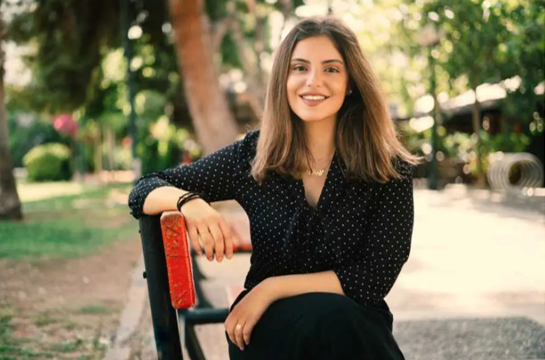
She has a Bachelor’s degree in Music Education and Musicology from Antonine University-Baabda-Lebanon in 2020 and a Byzantine music Diploma from the School of Byzantine Music of the Holy Archdiocese of Athens – Greece in 2021. In parallel, she continues her musical training in Oriental singing and plays the piano and the oud (Arabic Oriental instrument). Apart from concerts, she gives classes in Byzantine and Oriental music.
In 2019, she had her first international concert in Brașov Festival – Romania, alongside the Romanian priest and soloist, Rev. Alexandru Grigoraș, and the Greek chanters Vangelis Gkikas and Gerontissa Mariam Skorda. Later in the year, Ribale recorded her first CD, entitled Oh my soul, in Brașov, under the festival’s sponsorship.
In 2021, she has had a series of concerts in countries like Russia, Romania, and Austria. In the summer, she took part as a soloist in the Diaghilev Festival in Perm-Russia and the Salzburg International Festival in Austria (the 100th edition) in collaboration with the Greek-Russian Maestro Theodor Currentzis and the MusicAeterna orchestra.
Source: basilica.ro