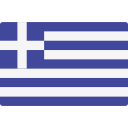


Greece will assume the presidency of the UN Security Council on October 1, for the second and final time during its two-year term as an elected member of the Council for 2025-2026.
The Greek presidency in May 2025 preceded it, while the country’s term on the Council ends on December 31. The presidency will be held by Greece’s Permanent Representative to the UN, Ambassador Aglaia Balta.
Greece is taking over the management of the work of the UN’s most important body for international peace and security at a time when major conflicts remain unresolved, relations among the permanent members continue to be marked by deep divisions, and the Council’s ability to forge common responses is being tested by a series of crises. The presidency does not, of course, give the country the power to unilaterally determine the Council’s decisions or policy.
The president chairs meetings and closed consultations, represents the Council and, under the authority of its 15 members, manages its programme of work and day-to-day operations. At the top of the international crises agenda remains Ukraine. The situation in the Middle East is equally complex. In Gaza, almost a year after the October 2025 ceasefire, the UN describes the truce as fragile. The crisis surrounding Iran and the Strait of Hormuz is of particular and immediate interest to the Greek presidency.
Other crises also remain in the background, requiring the Council’s continued attention: the war in Sudan, where fighting between the armed forces and the RSF continues and drone attacks are intensifying, as well as Haiti, where nearly 1.5 million people have been displaced by armed violence. As recently as September 29, the Council renewed for six months the mandate of the international force fighting gangs, ahead of the elections scheduled for December.
However, October could also acquire particular institutional significance for the Greek presidency because of the process of selecting the next Secretary-General. The selection of a new UN Secretary-General could prove to be the most significant political moment of Greece’s presidency. Under Article 97 of the UN Charter, the Secretary-General is appointed by the General Assembly upon the recommendation of the Security Council. This means that, if the necessary agreement is reached during October – and, crucially, if none of the five permanent members with veto power objects – the Council’s decision on the person who will succeed António Guterres could be taken under the Greek presidency. The selection process is already underway, with the UN having published the candidates and the stages of the process.
For Greece, October is not simply another month in the presidency of a UN body. It coincides with a period in which the Council is simultaneously called upon to manage wars and crises with direct global consequences and potentially to select the person who will lead the Organisation from January 1, 2027. For Greek diplomacy, therefore, the challenge will be primarily institutional: to manage an exceptionally charged month, facilitate consultations among the 15 members and keep the Council functioning at a time when geopolitical divisions remain deep.