

• About
  • Advertise
  • Contact
Sunday, February 8, 2026
No Result
View All Result
NEWSLETTER
Orthodox Times (en)
  • Home
  • Orthodoxy
    • Ecumenical Patriarchate
      • Dioceses of the Ecumenical Patriarchate
      • Mount Athos
      • Archdiocese of America
      • Archdiocese of Australia
      • Church of Crete
    • Patriarchates
      • Patriarchate of Alexandria
      • Patriarchate of Antioch
      • Patriarchate of Moscow
      • Patriarchate of Serbia
      • Patriarchate of Romania
      • Patriarchate of Jerusalem
      • Patriarchate of Bulgaria
      • Patriarchate of Georgia
    • Churches
      • Church of Greece
      • Church of Cyprus
      • Church of Poland
      • Church of Albania
      • Church of Czech and Slovakia
      • Church of Ukraine
  • Politics
    • USA
    • Europe
    • Middle East
  • Society
    • Greek Diaspora
    • Culture
  • Spirituality
  • Christianity
  • Opinions
  • Home
  • Orthodoxy
    • Ecumenical Patriarchate
      • Dioceses of the Ecumenical Patriarchate
      • Mount Athos
      • Archdiocese of America
      • Archdiocese of Australia
      • Church of Crete
    • Patriarchates
      • Patriarchate of Alexandria
      • Patriarchate of Antioch
      • Patriarchate of Moscow
      • Patriarchate of Serbia
      • Patriarchate of Romania
      • Patriarchate of Jerusalem
      • Patriarchate of Bulgaria
      • Patriarchate of Georgia
    • Churches
      • Church of Greece
      • Church of Cyprus
      • Church of Poland
      • Church of Albania
      • Church of Czech and Slovakia
      • Church of Ukraine
  • Politics
    • USA
    • Europe
    • Middle East
  • Society
    • Greek Diaspora
    • Culture
  • Spirituality
  • Christianity
  • Opinions
No Result
View All Result
Orthodox Times (en)
No Result
View All Result

An explanation of the liturgies of the Holy Week

Apr 13, 2020 | 13:06
in Opinions
Just say the prayer without ceasing

Great Lent and Holy Week are two separate fasts and two separate celebrations. Great Lent ends on Friday of the fifth week (the day before Lazarus Saturday). Holy Week begins immediately thereafter. Let’s explore the meaning of each of the solemn days of Passion Week.

Lazarus Saturday: Lazarus Saturday is the day which begins Holy Week. It commemorates the raising of our Lord’s friend Lazarus, who had been in the tomb four days. This act confirmed the universal resurrection from the dead that all of us will experience at our Lord’s Second Coming. This miracle led many to faith, but it also led to the chief priest’s and Pharisees’ decision to kill Jesus (John 11:47-57).

Palm Sunday (The Entrance of our Lord into Jerusalem): Our Lord enters Jerusalem and is proclaimed king – but in an earthly sense, as many people of His time were seeking a political Messiah. Our Lord is King, of course, but of a different type – the eternal King prophesied by Zechariah the Prophet. We use palms on this day to show that we too accept Jesus as the true King and Messiah of the Jews, Who we are willing to follow – even to the cross.

Holy Monday, Tuesday and Wednesday: The first thing that must be said about these services, and most of the other services of Holy Week, is that they are “sung” in anticipation. Each service is rotated ahead twelve hours. The evening service, therefore, is the service of the next morning, while the morning services of Holy Thursday and Holy Saturday are the services of the coming evening.

Understanding that, let’s turn to the Services of Holy Monday, Tuesday and Wednesday (celebrated Palm Sunday, Monday and Tuesday evening). The services of these days are known as the Bridegroom or Nymphios Orthros Services. At the first service of Palm Sunday evening, the priest carries the icon of Christ the Bridegroom in procession, and we sing the “Hymn of the Bridegroom.” We behold Christ as the Bridegroom of the Church, bearing the marks of His suffering, yet preparing a marriage Feast for us in God’s Kingdom.

Each of these Bridegroom Orthros services has a particular theme. On Holy Monday, the Blessed Joseph, the son of Jacob the Patriarch, is commemorated. Joseph is often seen as a Type of Christ. Joseph was betrayed by his brothers, thrown into a pit, and sold into slavery by them. In the same way, our Lord was rejected, betrayed by His own, and sold into the slavery of death. The Gospel reading for the day is about the barren fig tree, which Christ cursed and withered because it bore no fruit. The fig tree is a parable of those who have heard God’s word, but who fail to bear the fruit of obedience. Originally the withering of the fig tree was a testimony against those Jews who rejected God’s word and His Messiah. However, it is also a warning to all people, in all times, of the importance of not only hearing God’s Word, but putting it into action.

The Parable of the Ten Virgins is read on Holy Tuesday. It tells the story of the five virgins who filled their lamps in preparation for receiving the bridegroom while the other five allowed their lamps to go out, and hence were shut out of the marriage feast. This parable is a warning that we must always be prepared to receive our Lord when He comes again. The theme of the day is reinforced by the expostelarion hymn we sing: “I see Thy Bridal Chamber adorned, O my Savior, but have no wedding garment that I may enter. O Giver of Light, enlighten the vesture of my soul, and save me.” The theme of Holy Wednesday is repentance and forgiveness. We remember the sinful woman, Kassiane, who anointed our Lord in anticipation of His death. Her repentance and love of Christ is the theme of the wonderful “Hymn of Kassiane” which is chanted on this night, reminding us one more time, before “it is too late,” that we too may be forgiven if we repent.

Holy Unction: The Mystery or Sacrament of Holy Unction is celebrated on Holy Wednesday evening. This service can be celebrated at any time during the year, especially when one is ill. However, because of our need for forgiveness and spiritual healing, we offer this service during Holy Week for the remission of our sins. We should prepare for this service prayerfully, as we do for Holy Communion.

Great and Holy Thursday: On Holy Thursday we turn to the last events of our Lord and His Passion. Thursday morning begins with a Vesperal Divine Liturgy commemorating the Mystical Supper. As previously mentioned, this is Holy Thursday evening’s service celebrated in the morning in anticipation. Everyone able should make an effort to receive Holy Communion at this service as it was at the Mystical Supper that our Lord instituted the Holy Eucharist. At this Liturgy, a second Host is consecrated and kept in the Tabernacle. It is from this Host that Holy Communion is distributed to the shut-ins and the sick throughout the coming year.

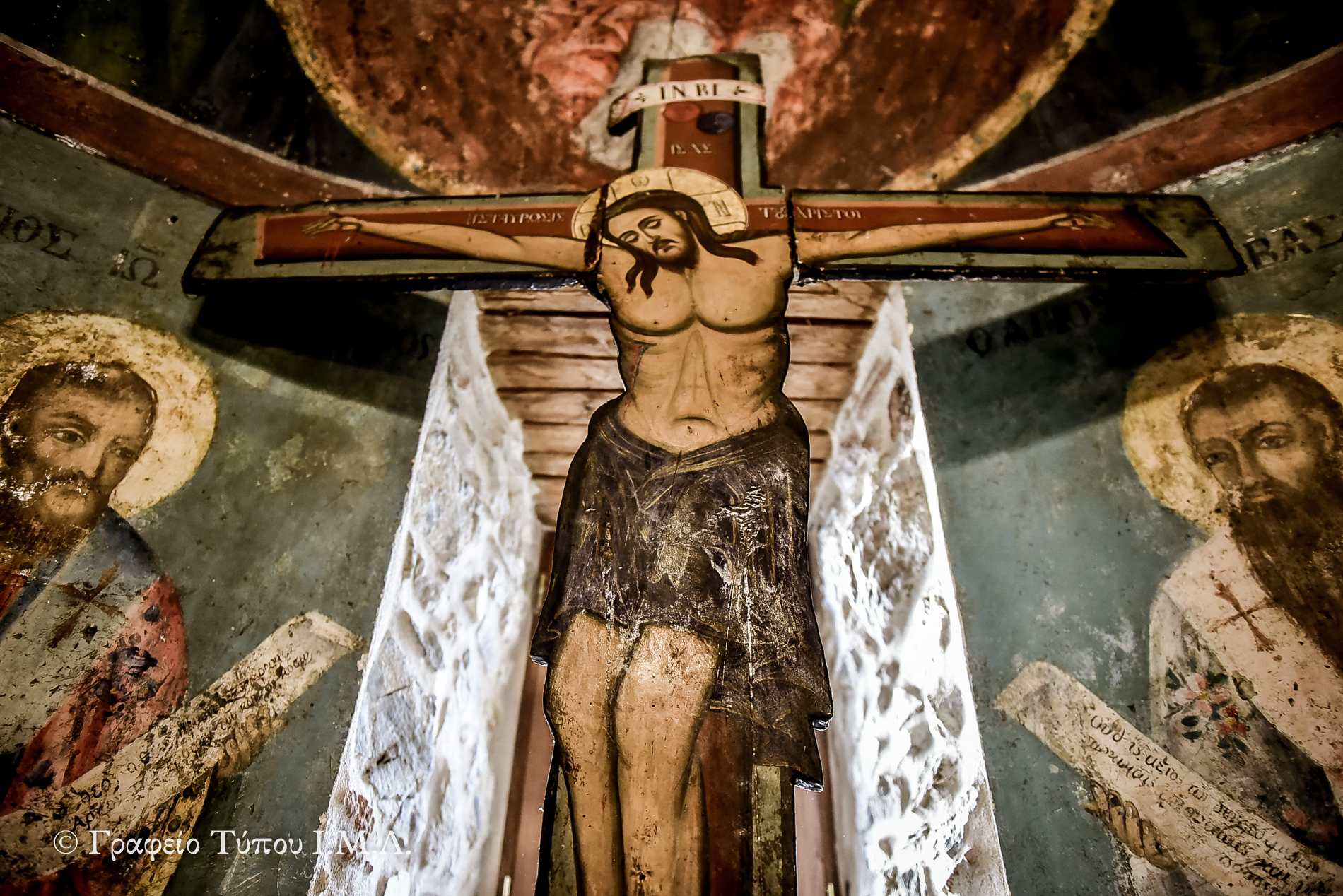
Thursday evening begins the services of Great and Holy Friday. The service of the Twelve Passion Gospels commemorates the solemn time of our Lord’s Crucifixion. After the reading of the fifth Gospel, the holy cross is carried around the church in procession, and Christ’s body is nailed to the cross in the center of the church.

Great and Holy Friday: This is a day of strict fast. As little as possible should be eaten on this day. It is the only day in the entire year that no Divine Liturgy of any kind can be celebrated. In the morning we celebrate the Royal Hours. These solemn hours are observed as we read the various accounts and hymns concerning the crucifixion. In the afternoon we celebrate the Vesper service of the taking down of Christ’s body from the cross. During the Gospel reading, our Lord’s body is taken off the cross and wrapped in a new, white linen sheet. This act commemorates the removal of Christ’s body from the cross by Joseph of Arimathea (John 19:38-42). Later in the service, the Epitaphios, or winding-sheet, with Christ’s body on it is carried in procession and placed in the recently decorated tomb. In the evening the Lamentations Orthros service is sung. This service begins solemnly, but by the end of the service, we are already anticipating the Resurrection of our Lord. Remember again, that the Holy Friday evening Orthros is the first service of Holy Saturday, the day in which we commemorate our Lord’s body resting in the tomb while His all-pure soul descends into Hades to free the faithful of the Old Covenant.

Great and Holy Saturday: This day is a day of hope and waiting. In the morning we celebrate a Vesperal Divine Liturgy which commemorates Christ’s victory over death. Bright vestments are worn as we anticipate Christ’s Resurrection. Laurel leaves are strewn throughout the church during the service because in the ancient world laurel leaves were a sign of victory. As the leaves are strewn, the choir chants “Arise O God and Judge the earth, for to Thee belong all the nations.” The Old Testament story of Jonah in the belly of the whale is read at this service because Jonah is seen in the Church as a Type of Christ. As Jonah was three days in the belly of the great fish and was then safely deposited back onto land, so our Lord was three days in the tomb before His glorious Resurrection. The Vesperal Divine Liturgy of Holy Saturday concludes the services of Holy Week and brings us to the eve of Great and Holy Pascha.

Source: Serbian Orthodox Church

Tags: EasterHoly WeekOpinions

Follow OrthodoxTimes.com on Google News and learn all the news about Orthodoxy in Greece and worldwide.

All the latest developments in the Orthodox world, society and humankind, at the moment they happen, at OrthodoxTimes.com


Related Posts

A response to the Russian attack on the Ecumenical Patriarch
Opinions

A response to the Russian attack on the Ecumenical Patriarch

February 2, 2026
Metropolitan of Sweden: “Erin Brockovich” and the “Green Patriarch”
Opinions

Metropolitan of Sweden: “Erin Brockovich” and the “Green Patriarch”

January 26, 2026
Bishop of Melitene: Bad company
Opinions

Bishop of Melitene: Bad company

January 25, 2026
The hardline campaign against the Patriarch
Opinions

The hardline campaign against the Patriarch

January 24, 2026
Bishop of Melitene: The Solitude of Gratitude
Opinions

Bishop of Melitene: The Solitude of Gratitude

January 17, 2026
Orthodoxy at the start of 2026: Key challenges ahead
Opinions

Orthodoxy at the start of 2026: Key challenges ahead

January 3, 2026
Load More
Next Post
Attica Bank supports the work of the Archdiocese of Athens for the homeless

Attica Bank supports the work of the Archdiocese of Athens for the homeless

Latest News

Bulgaria approved €1.5 nillion for road to Zograf Monastery on Mount Athos

Bulgaria approved €1.5 nillion for road to Zograf Monastery on Mount Athos

by NewsRoom
Feb 07, 2026 | 17:35
0

Bulgaria’s caretaker government approved €1.5 million from the Council of Ministers’ 2026 budget to continue repairs on the road...

Warsaw hosted 19th National Conference of Advisors of Orthodox Religious Education

Warsaw hosted 19th National Conference of Advisors of Orthodox Religious Education

by NewsRoom
Feb 07, 2026 | 16:00
0

On February 5, 2026, at the Orthodox Culture Centre of Saints Cyril and Methodius in Warsaw, with the blessing...

Sydney: Blessing service held for the opening of the new school year at St Spyridon’s College

Sydney: Blessing service held for the opening of the new school year at St Spyridon’s College

by NewsRoom
Feb 07, 2026 | 14:15
0

The new school year for the students of St Spyridon’s College in Sydney commenced with the traditional Service of...

Archbishop Elpidophoros unveiled plans for a Greek University and new GOA cathedral

Archbishop Elpidophoros unveiled plans for a Greek University and new GOA cathedral

by NewsRoom
Feb 07, 2026 | 12:13
0

Addressing the Leadership 100 Conference in Phoenix, the Archbishop outlined two transformative goals and spoke forcefully against far-right extremism...

First Divine Liturgy at St Andrew the Apostle Greek Orthodox School inaugurated its liturgical life

First Divine Liturgy at St Andrew the Apostle Greek Orthodox School inaugurated its liturgical life

by NewsRoom
Feb 07, 2026 | 11:01
0

On Tuesday 27th January 2026, with the blessing and canonical permission of Archbishop Nikitas of Thyateira and Great Britain,...

Saint Parthenius, Bishop of Lampsacus (7 February)

Saint Parthenius, Bishop of Lampsacus

by NewsRoom
Feb 07, 2026 | 10:31
0

Parthenius was the son of a deacon from the town of Melitopolis. As a child he remembered well the...

Newsletter

Sign up for our weekly newsletter


Quick Links

  • Orthodoxy
  • Politics
  • Society
  • Spirituality
  • Christianity
  • Opinions
  • History
  • Press Releases

Get Social

About Us

Advertise

Contact

Terms Of Use

© 2026 OrthodoxTimes.com
digital world media

No Result
View All Result
  • Home
  • Orthodoxy
    • Ecumenical Patriarchate
      • Dioceses of the Ecumenical Patriarchate
      • Mount Athos
      • Archdiocese of America
      • Archdiocese of Australia
      • Church of Crete
    • Patriarchates
      • Patriarchate of Alexandria
      • Patriarchate of Antioch
      • Patriarchate of Moscow
      • Patriarchate of Serbia
      • Patriarchate of Romania
      • Patriarchate of Jerusalem
      • Patriarchate of Bulgaria
      • Patriarchate of Georgia
    • Churches
      • Church of Greece
      • Church of Cyprus
      • Church of Poland
      • Church of Albania
      • Church of Czech and Slovakia
      • Church of Ukraine
  • Politics
    • USA
    • Europe
    • Middle East
  • Society
    • Greek Diaspora
    • Culture
  • Spirituality
  • Christianity
  • Opinions
  • Greek Version

© 2023 OrthodoxTimes.com - All rights reserved.

This website uses cookies to improve your experience. We'll assume you're ok with this, but you can opt-out if you wish.AcceptReject Read More
Privacy & Cookies Policy

Privacy Overview

This website uses cookies to improve your experience while you navigate through the website. Out of these, the cookies that are categorized as necessary are stored on your browser as they are essential for the working of basic functionalities of the website. We also use third-party cookies that help us analyze and understand how you use this website. These cookies will be stored in your browser only with your consent. You also have the option to opt-out of these cookies. But opting out of some of these cookies may affect your browsing experience.
Necessary
Always Enabled

Necessary cookies are absolutely essential for the website to function properly. This category only includes cookies that ensures basic functionalities and security features of the website. These cookies do not store any personal information.

Non-necessary

Any cookies that may not be particularly necessary for the website to function and is used specifically to collect user personal data via analytics, ads, other embedded contents are termed as non-necessary cookies. It is mandatory to procure user consent prior to running these cookies on your website.

SAVE & ACCEPT